Temasek's Dilhan: Liquidity Is a Premium Right Now
What's New
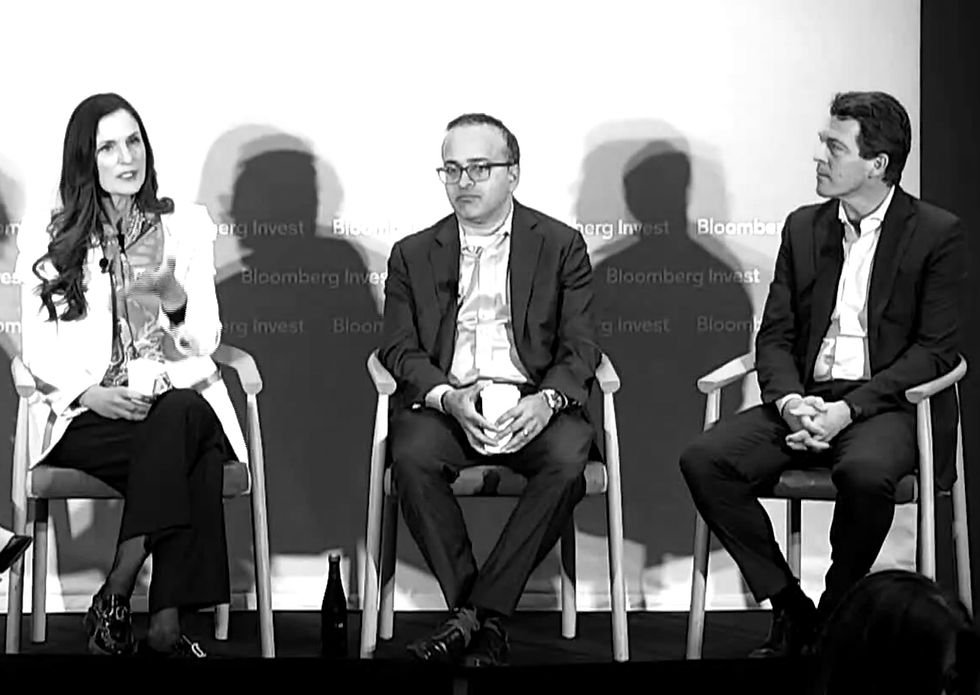
Temasek Holdings CEO Dilhan Pillay Sandrasegara made a deliberate and somewhat contrarian call at Bloomberg Invest 2026: in a world of compounding geopolitical shocks, AI disruption, and credit market stress, liquidity itself has become a source of premium return. The $340 billion sovereign fund has actively shifted its portfolio toward a 50/50 liquid to illiquid balance, up from 20% liquid in 2011, explicitly because the frequency and unpredictability of market dislocations means the ability to pivot quickly has real option value that is not adequately captured in traditional asset allocation frameworks.
Why It Matters
Sovereign wealth funds and large institutional allocators setting their asset allocation posture now will shape the flow of capital into private markets for the next decade. Temasek's deliberate pull back from its peak illiquid weighting, a structural decision driven by the conviction that illiquidity premiums are harder to earn in a higher-rate environment with longer time-to-monetization, is a leading indicator of how the most sophisticated long-term capital pools are reassessing private market allocations in the current environment.
Big Picture Drivers
Illiquidity premium compression: In a low-rate environment, the illiquidity premium was earnable within five years. Today, time to monetization has extended to a decade or more, fundamentally changing the risk-adjusted calculus for committing long-dated capital to private markets.
Shock frequency: AI disruption, oil price volatility, geopolitical events, and tariff cycles are arriving more frequently and with less predictability than a decade ago. Maintaining liquid reserves is now an active investment strategy, not just a risk management buffer.
AI as a portfolio lens: Temasek is assessing every portfolio company through the dual lens of AI disruption risk and AI adoption opportunity. Companies that can use AI to accentuate their business model, not just survive it, are the priority investments.
Geopolitics as a permanent variable: Temasek now treats geopolitics, dollar exposure, and technology disruption as three permanent structural factors in every investment decision, a shift from ten years ago when geopolitics was largely a background consideration.
Dollar exposure management: With 41% of the portfolio in US dollar-denominated assets, hedging costs of 2.5 to 2.6% make traditional currency hedges economically unattractive, pushing Temasek toward natural hedges through investments that can outpace expected dollar depreciation.
By The Numbers
$340B in Temasek AUM as of the fiscal year ending March 2025
50/50 current liquid to illiquid portfolio split, up from 20% liquid in 2011
36% of Temasek portfolio in Singapore assets today, down from 97% at founding
2% of portfolio currently in private credit, with potential to grow to 5% over the long run
41% of portfolio exposed to US dollar-denominated assets
Key Trends to Watch
Illiquidity premium reassessment is underway across large sovereign and institutional allocators as time-to-monetization extends and rate environments remain elevated, potentially slowing the pace of new private market commitments.
AI-plus-climate convergence is emerging as a multi-decade investment theme, with Temasek identifying companies at the intersection of AI adoption and climate transition as long-term compounders across both liquid and illiquid portfolios.
Pharma and biotech are identified as sectors where AI adoption will have a profound but slow-moving impact, requiring careful selection of companies that can partner effectively with AI tools while navigating a heavily regulated approval environment.
Dollar reserve currency status remains intact despite recent volatility, and Temasek's continued commitment to US-denominated assets reflects a structural view that geopolitical shocks, including the current Middle East situation, reinforce rather than undermine dollar safe-haven demand.
Memorable Quotes
"We decided we should maintain a certain level of liquidity in our portfolio because we do think there's a premium in being liquid today." Dilhan reframing liquidity not as a drag on returns but as its own return source. The ability to pivot, rebalance, and seize dislocations has value that standard allocation models fail to price.
"In the previous decade, time to monetisation went to five years, then eight years. Today you're looking at even a decade. The question for us is whether you will get the illiquidity premium in a higher interest rate environment." The clearest articulation of why Temasek is structurally reducing its private market weighting. It is not a lack of conviction in the asset class. It is a rational repricing of the terms under which the illiquidity premium is worth paying.
"Disruption will come sooner than you've expected. To what extent are companies prepared for that?" Dilhan capturing the central investment challenge of the current era. The time horizon for meaningful AI disruption has compressed dramatically in the last 12 months. The question is no longer if but when, and whether management teams are in front of it or behind it.
"We are primarily an equities house. Private credit is a diversifier and a signal. It gets us up the capital stack and gives us market signals for what could happen in the equity space." An unusually candid statement of purpose for private credit within a sovereign portfolio. Temasek is not using private credit to maximize yield. It is using it as an early warning system for stress in the equity portions of the same capital structure.
The Wrap
Temasek's portfolio evolution from a 97% Singapore-concentrated holding company to a globally diversified 50/50 liquid-to-illiquid institution represents one of the more remarkable sovereign fund transformations of the past two decades. The current posture, deliberately maintaining liquidity as a return-generating strategic option rather than a defensive concession, is a sophisticated response to a world where macro shocks are more frequent, monetization timelines are longer, and the difference between being positioned and being able to act is the entire investment edge. For private markets managers courting large institutional capital, the message is clear: illiquidity must earn its premium in ways that are explainable, time-bounded, and genuinely additive to a total portfolio.


Comments