Saba's Goodwin: Private Credit's Liquidity Loop Is Starting
What's New
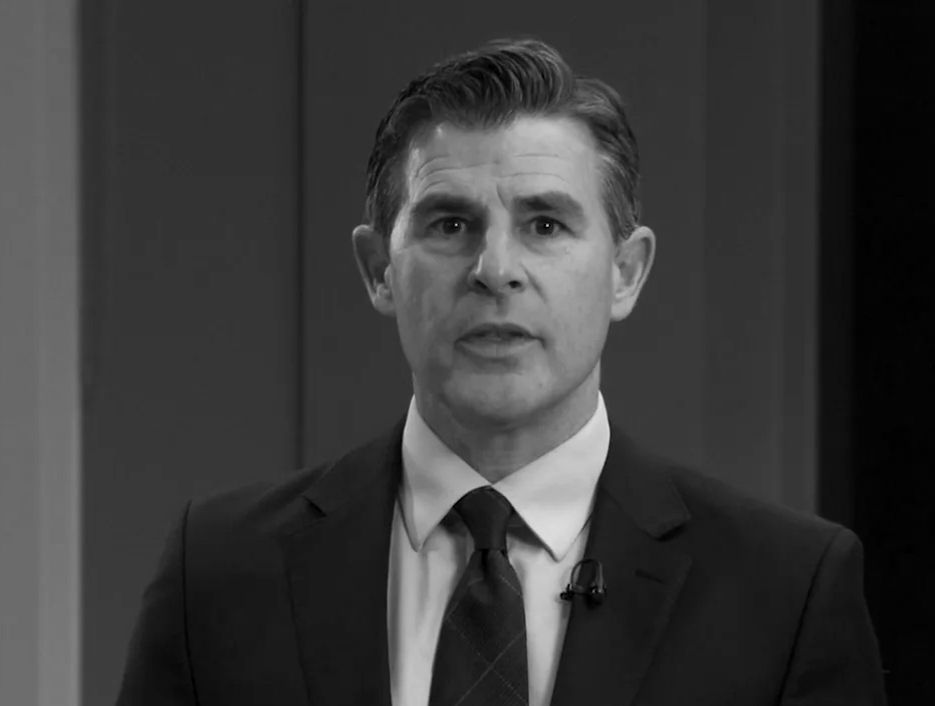
Kieran Goodwin, Partner at Saba Capital, delivered the most detailed reflexivity framework for private credit stress in a conversation with Ted Seides on Capital Allocators, arguing that dividend cuts across major non traded BDCs have triggered a behavioral feedback loop in the retail wealth channel that the industry's liquidity structures were never designed to absorb. Goodwin, a three decade credit veteran across King Street, Panning Capital, and now Saba, contends that asset liability mismatches in the $450 billion non traded BDC and interval fund complex will convert a manageable redemption cycle into a credit crunch if forced selling meets a market with no natural bid. Saba is actively positioning on the other side, including a reported tender offer for Blue Owl's OBDC2 at a discount to NAV.
Why It Matters
The private credit industry has framed the current redemption wave as rational and temporary. Goodwin provides the structural counterargument: retail investors treat these products as income vehicles, not credit investments, and financial advisors apply a generational heuristic when dividends get cut. The 5% quarterly liquidity threshold in interval funds is not a safety valve but a countdown clock. Once managers exhaust their liquid sleeves, the only remaining option is forced selling of illiquid assets into a market that has never been stress tested for sustained outflows. The plumbing was built for inflows. The question now is whether it can survive the reverse.
Big Picture Drivers
Dividend mechanics: SOFR declined 175 basis points while new issue spreads compressed, producing roughly 300 basis points of gross yield erosion across BDC portfolios relative to 2022 and 2023 vintages. Blackstone BCRED, Apollo's non traded BDC, and Oaktree's non traded BDC all cut dividends by approximately 10% in Q4, and redemption rates across the top six managers immediately doubled from 2.1% to 4.3%.
Retail behavioral pattern: Financial advisors operate on a simple rule that Goodwin describes as generational: cut my dividend, I'm out. They do not distinguish between a rational adjustment driven by rate normalization and a signal of credit deterioration. Goodwin draws a direct parallel to MLPs, the retail income darling of a decade ago, which lost the wealth channel permanently after the 2015 to 2016 energy crunch.
Marking variance: Public and non traded BDCs holding the same club deal loan show NAV discrepancies of 4 to 6 percentage points between the best and worst markers. Goodwin cites cases where three managers mark a stressed second lien at 60 while a fourth marks the identical position at 85. The marking problem is not theoretical. It is observable loan by loan across public filings today.
Leverage dependence: Private credit returns only function with leverage at the fund level. Goodwin states that an unlevered BDC would be a yawn, especially after fees. When bank lenders begin pulling lines from lower quartile managers running elevated default rates, the entire return proposition collapses and the reflexivity loop accelerates.
Interval fund structure: Interval funds cannot gate without an SEC exemption, and that exemption requires demonstrating total illiquidity, not simply low prices. The structural floor that investors assume exists is far lower than they realize, and the path from orderly redemptions to forced liquidation is shorter than the industry acknowledges.
By The Numbers
$350 billion in non traded BDC assets, plus approximately $100 billion in interval funds, totaling $450 billion in semi liquid private credit structures
175 basis points of SOFR decline driving approximately 300 basis points of gross yield compression across BDC portfolios
2.1% to 4.3% redemption rate increase across the top six non traded BDCs following Q4 dividend cuts
4 to 6% NAV variance between the best and worst markers among BDCs holding identical positions
15 to 20% potential default rates at bottom quartile managers, versus 7 to 8% for the broader market
Key Trends to Watch
Secondary market emergence: Saba's tender for Blue Owl OBDC2 signals that secondary trading of private credit fund interests at discounts to NAV is moving from concept to execution, and the clearing price for that liquidity will set a reference point for the entire market.
Bank line renewals: Lower quartile managers with concentrated sector exposure and elevated default rates face the risk of banks cutting or not renewing fund level credit facilities, which would trigger forced deleveraging independent of the redemption cycle.
Software default wave: Goodwin identifies SaaS as the sector most likely to produce a concentrated default cycle, noting that 80% gross margins attracted massive capital allocation across venture, private equity, and private credit, but AI disruption is now compressing the economics that justified those capital structures.
Annuity provider tail risk: The furthest tail scenario involves annuitants surrendering policies at insurance companies that have loaded up on triple B rated or better private credit. Goodwin flags this as low probability but the ugliest outcome if confidence erodes far enough down the capital stack.
Memorable Quotes
"I've looked throughout my career for asset liability mismatches and I truly believe that asset liability mismatches cause liquidity crunches and liquidity crunches can cause credit crunches." Goodwin framing the mechanism that has defined every major credit dislocation he has traded through across three decades.
"Credit is correlated when it gets stressed." The simplest articulation of why diversification assumptions in BDC portfolios will not hold under redemption pressure. Individual loan quality is secondary to the systemic dynamic once forced selling begins.
"If you're long credit, you're short volatility. You want things to chug along because you don't have upside. When you introduce something like AI, the paradigm has shifted." Goodwin explaining why AI disruption is structurally incompatible with the stable, low volatility environment that credit investors require. Higher volatility means wider spreads, more defaults, and winners and losers replacing the uniform stability that made private credit returns predictable.
"Everyone has a plan until you get punched in the face." Goodwin invoking Tyson to describe what happens when illiquid credit portfolios meet real price discovery for the first time.
The Wrap
Goodwin is not predicting a systemic crisis. He is describing a structural vulnerability that is already in motion: dividend cuts triggered by rate normalization are activating a retail behavioral pattern that the semi liquid fund complex was not designed to withstand. The firms that survive this cycle will be those with the best underwriting, the largest liquidity sleeves, the most accurate marks, and the most transparent investor communication. The firms that do not will face a feedback loop where redemptions force selling, selling creates price discovery, and price discovery triggers more redemptions. Saba is betting that the spread between those two outcomes will be wide enough to build a business around. The allocators and managers who recognize that distinction now, rather than after the loop accelerates, will be the ones still standing when secondary markets for private credit finally clear.


Comments